Thursday, September 3, 2020

Sheldon Cooper Presents: Words


"Good evening, all. Sheldon Cooper here with my assistant Amy. This week we'll examine words of consequence. Here's some you'll never hear: 'My parachute didn't open.' " He grinned. "Unless you're a zombie, and then you just get up and walk away."

Amy pushed at her glasses. "Why would a zombie. . . .never mind."

"Next," Sheldon went on, "here's words your dentist will  never hear: 'Skip the tired jokes, Hoss, and just fix the tooth, okay?' " Despite Amy's warning look, he couldn't resist dumbing it down. "Oops--looks like the dentist forgot the novocaine!" He bowed. "Thank you, you're too kind. How about words you don't want to hear during cataract surgery: 'Oh crap. . . .' "

"Rough, Sheldon."

"Well, let's turn to history. We all know the trite quote 'Dr Livingston, I presume'. Actually, he mistook the aide from Caracas, who said, 'Thou presumest most wrongly, seenyore'. Now that's quotable!" 

Amy grimaced. "And we think you're making that up, seenyore." She held up a photo of a gender reveal, the new craze of announcing coming births. A balloon pop spewed a cloud of blue powder. "What if it's one of each? Now you have pink and blue powder mixing to make purple. What the heck is that?"

"Really, Amy, you're too much the biologist. Let's consider unlikely words from Captain Picard: 'Mr Worf, the word is weapon, not hweapon'. "

"That's a weird segue. But as long as we're on Star Wars--" Amy puzzled over Sheldon's horrified look. "--the meticulous Dr Spock will never say 'The odds are about three to one, but don't quote me'." She laughed. "Unless he wants to get kicked off the Death Star."

Sheldon's jaw quivered with the effort of not blowing up. "We'll try to get past a trade of job titles, ships served on, and wholesale franchise swap. Let's move on to those cartoons where you have to supply the words." He displayed a four-panel drawing. A hen caught its reflection in a floor mirror and engaged the other in a furious pecking battle. The mirror tipped forward. WOP! The last panel had the dazed bird wandering off. "Let's have some callers. What's the bird thinking?"

A youth came on speakers. "No fair pulling that kung fu stuff!"

"I don't hate it," Amy said. "Here's a lady from Newark. Go ahead, caller."

"She must be one of those biker babes!"

"No, no," Sheldon insisted. "We're missing the theme here, clearly about the pecking order. I'd go with 'Okay, lady, take it'."

"Take what?" Amy asked.

"Her place at the top of the pecking order, of course."

Numerous callers chimed in before Sheldon was compelled to return to outer space. "In what universe is Mr Spock a member of the Star Empire?"

Amy shrugged. "There was that episode where he had a pointed beard, and threatened to blow up a planet if they didn't surrender their corbamite."

"That was the evil Spock from another dimension, and the word is trilithium!"

"What's the difference? It's all spaceships and lasers." Amy recognized a pending head explosion when she saw one. "We'll take a break, and get away from this scifi jazz."

"Kaboom!" Sheldon mimed a head pop. 

Monday, August 31, 2020

Bigfarma


A remote village appeared out of the morning mist. Two passengers in the canoe sweltered and slapped at no-see-ums, frowned at razoring bug song and a staccato echo of wood drums. Bob Symonds, CEO of Astro-Glasco Pharmaceuticals, received a water bottle from  Olaf Oleson, manager of clinical trials for the new meningitis vaccine. Painted faces on shore were not friendly. Women with infants on their backs ceased pounding grain, and men left off mending nets. A chant arose.

"What are they saying?" Symonds demanded. "Sounds like 'pig farmers'."

"Big Pharma," Oleson said. He wiped his glasses, squinted at sparkles in the muddy waters. "It's not a compliment thanks to the new chief."

Symonds climbed out when the canoe ground ashore, eyeing a young man in red and black who came down from a stilt hut. The photo dossier identified him as Selko. Numerous villagers had died during the trials, but Selko's particular side effect was a new genius intellect. Symonds meant to know how it happened, which required blood samples, and so he'd acquiesced to the man's stipulation that he come in person.

Oleson scanned the village as they walked up the sandy hill, trying not to look as anxious as he felt. "He learned English in a matter of weeks, with the help of a laptop he bargained from the field team. And he looks plenty angry."

"I'll handle him. Our backer has very deep pockets."

Without ceremony, Selko led them up the ladder. The hut sported shields and spears, merely ornamental, since the Batonga were a peaceful folk. It was a prime consideration for the experiments. The chief squatted on a reed mat and invited them to sit.

"Mwapona," Oleson greeted. How are you.

"Kabotu twalumba." Fine, thanks. The chief waited.

As the visitors' eyes adjusted, they noticed the old man in a floppy hat. He held a large gourd pipe having a long stem.

"The calabash fruit," said the chief. "One of your pipe designs takes its name from it, notably in the collection of Sherlock Holmes."

The man was widely read, and only since a few weeks ago. Such an intellect could be Symonds', once he had those blood samples. A few hundred more test subjects should iron out the bugs.

"This is my father," Selko went on. "After the injection, he no longer speaks. My brother is dead; some of the women have stopped their courses, meaning they cannot bear children. Some of the young ones are now dullards. Is this not what your masters desire?--to cull the population by nine-tenths?"

This would take more than blankets and beads, Symonds realized. He let the familiar party line roll off his tongue. "These are unfortunate coincidences. You should know that your government is well paid by. . . .certain wealthy parties to ensure your cooperation."

Selko seemed unbothered by money or coercion. "Why are you not required to do a placebo study, which would isolate side effects to your drug?"

Again the practiced lie: "That would deprive thousands of people a needed treatment."

"The pill makers could use the same excuse, but they are not allowed to."

Symonds spread hands affably, hiding his impatience. "You must understand the need for herd immunity."

"Herd? Human beings are not cattle. Perhaps it is your masters who need culling by nine-tenths."

The aide jumped in. "We're prepared to offer millions for your help. Think of it: no more fears of meningitis."

"How many thousands more Africans must die before this happens?--victims of experiments you would not perform on your own people?"

"Your government can force the matter," Symonds warned.

"Ah, but my government is forever two steps behind me." Selko motioned, and four men came up the ladder to pin the arms of the visitors. Selko pulled out a pair of syringes. "This one was given to my father." He jabbed a struggling Symonds. "This one was given to my brother." He poked a bug-eyed Oleson.

"Do you know what you've done?" Symonds thundered. "It will be years before that injection is safe! You've killed us!" Both visitors suddenly realized how this vindicated Selko's words.

"Have no fear," Selko assured them. "The needles delivered only saline. Now leave me, as there is much work to be done." He held back one of the tribesmen. "See they are far from here before there is an unfortunate coincidence." The man nodded knowingly.

Selko pulled the laptop from under his bed. He already had home addresses for every Bigfarma CEO on the planet. Now he did a new search: soldiers of fortune for hire. One had to be discreet, as he couldn't very well advertise for assassins.

Sunday, August 30, 2020

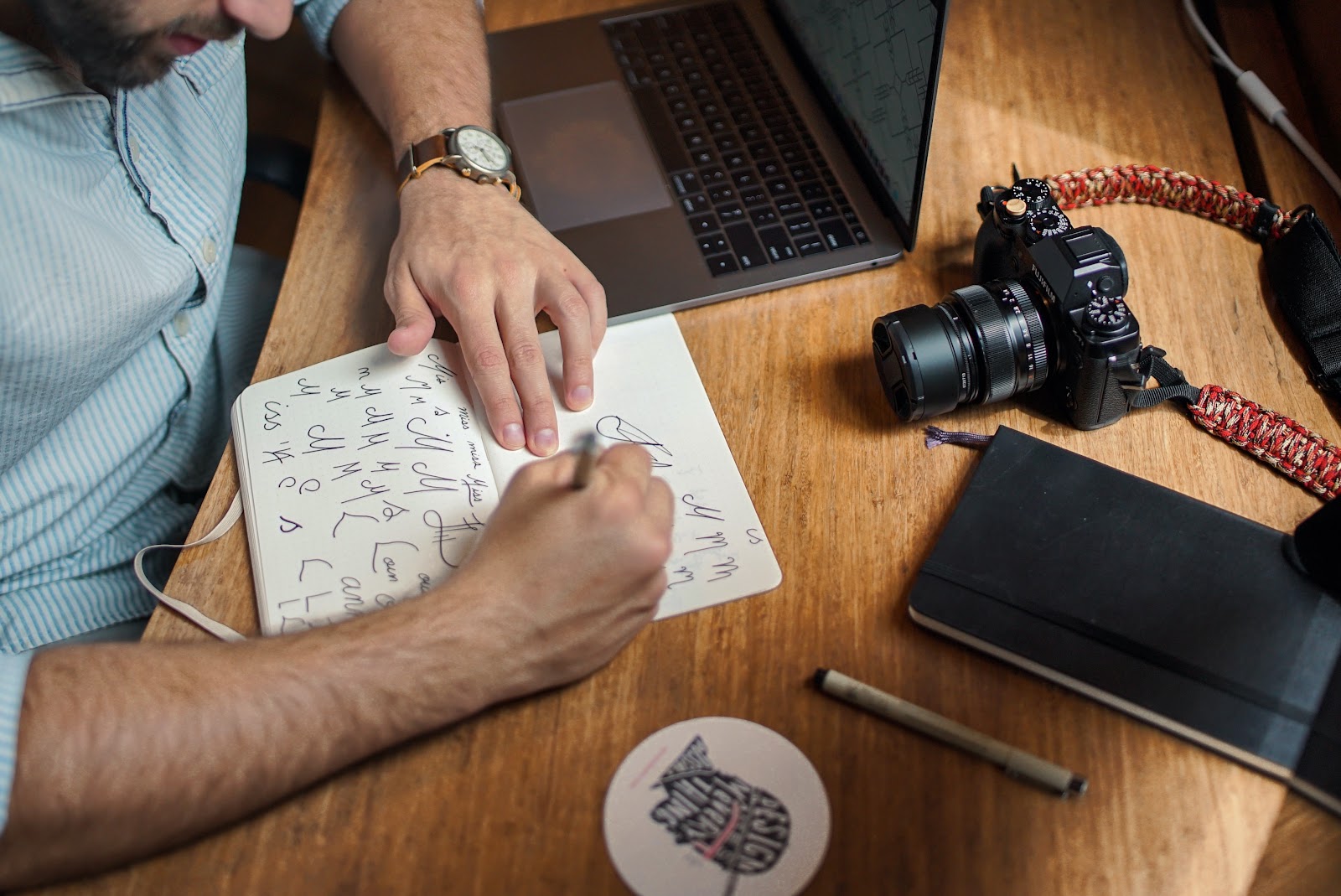
Boosting Your Creativity


Image for post


By Tom Beck


Sustained creativity is difficult. Too often, we’re seduced by the allure of inspiration. We wait for the muse to strike.

According to the World Economic Forum, creativity will be one of the most vital skills in the twenty-first century. Creativity is not just for working artists — it’s a useful and increasingly necessary skill for anyone to possess.

To develop your creativity, you must learn how to tap into it every day. You must devise a system where you can produce constantly, no matter how you feel. No matter how dry your inspiration.

Consistent creativity requires a system. There’s a bit of up-front work putting the system in place, but once it’s there, it proceeds naturally. Julia Cameron likens the creative process to a radio — with a transmission and a receiver. You must gather enough “inputs” (receiver) so that you can continually broadcast your creativity (transmission). You can also think of this process like refilling a well so that it’s always full when you need to draw from it every day.

What does the universe want you to create? If you cannot find time to stop and listen, you will never know.

For years, I struggled with this. I was always taking from my creative well but never refilling it. I would have sporadic bursts of creative work followed by droughts of inactivity. I never thought about refilling my well so it’s no surprise it was often empty. Instead of understanding the process, I beat myself up. I considered myself “not creative” enough.

But we’re all creative. Creativity is as natural to humans as breathing. Remember when you were a kid — you were creative without thinking about it. You just did it. You drew and wrote and painted and played music and danced because it was fun. That’s it.

Over the last few years, I’ve developed a little routine each day that helps me stay creative. It’s quite simple — only three real tools, none of which takes very long. You could do all of them in an hour — twenty minutes each. Every morning, I make these three tasks my priority.

They’re the most crucial things I could do — they refill my creative well.

#1 Journal

“Journaling daily is the most potent and powerful keystone habit you can acquire. If done correctly, you will show up better in every area of your life — every area! Without question, journaling has by far been the number one factor to everything I’ve done well in my life.” — Benjamin Hardy

The first thing I do in the morning, immediately after I wake up, is to write three pages in my journal. Well, usually, I get coffee, first. But then it’s right to the pages.

Journaling refills the creative well via subtraction. Like you, I have so many thoughts bouncing through my head — concerns ranging from what I need to pick up at the grocery store to how to fix the world’s problems. Writing in my journal helps get these thoughts out of my head and onto the page so that my mind is clear.

Here’s a neat trick — write down what you need to do each day.

You haven’t done it yet, but your brain feels like something has been accomplished. It’s why writing lists is so satisfying. I use my journal as a to-do list for the day — here are the things I need to accomplish. My list runs from the mundane (pick up more milk) to the abstract (thoughts about a poem I’m working on). I don’t think about it too much, I just list off the things on my mind.

Another technique for your journal is future-planning. In Personality Isn’t Permanent, Benjamin Hardy recommends using your journal for goal-setting. As Hardy writes, you can use your journal to:

  • Clarify your ideas and insights

  • Affirm that you can make your goals real

  • Make plans for accomplishing your goals

  • Acknowledge the help you receive

I like to write down my goals every day in my journal. Every month and every quarter, I do a review and reassess the goals I have, my progress, and how important they remain to my happiness. I do all of this in my journal and it’s a great way to keep myself motivated, particularly on those days that I don’t feel like working.

A journal is also a good warm-up exercise. If you write, I’m sure you’ve noticed that the first couple hundred words you produce aren’t very good. It takes a bit of time to swing into practice. Writing in your journal helps you work through the awkward pre-writing. Then, when it’s time to dive into a creative project, you’re already warmed up. You can think of your journal like stretching before you go for a run.

I like to write in my journal right after I wake up so that I can record my dreams while they’re still fresh. I don’t keep a dream journal per sé, but it’s helpful to write down my initial impressions. When you sleep, your mind doesn’t turn off. Your subconscious remains alert and communicates to you throughout the night. Many of my deepest insights have come from remembering and recording my thoughts immediately after waking up.

#2 Meditate

“What I’ve discovered is that the practice of diving within in meditation makes ideas easier to catch and the enjoyment of the doing increases exponentially and you appreciate people more — you seem to almost recognize everyone. It becomes fun to work. It’s not the kind of thing that you even think about, it just grows naturally.” — David Lynch

After I finish writing in my journal, I sit down and meditate for ten or twenty minutes. Like journaling, meditation is another subtraction technique. It’s another way to clear the mind so that creative thoughts have room to breathe.

Whereas journaling is an active form of subtraction (you actively write down your thoughts as a way to clear your head), meditation is a passive form of subtraction. You sit and watch your thoughts — that’s it.

Meditation is a form of prayer. It’s a way to reconnect with the universe. It’s a way to slow down and listen to what the universe is trying to tell you. What does the universe want you to create? If you cannot find time to stop and listen, you will never know.

I use meditation to get clarity on my creative goals. Often, I have a lot of goals running in tandem and it can be hard to know what to prioritize. Especially with financial considerations. As with many of our best creative ideas, we can struggle to think about how to “monetize” them. Worst, your loftiest creative goals promise to take years, even decades to accomplish.

How can you prioritize long-term projects with short-term payoffs (like making sure this month’s rent is paid)? Meditation helps. When you meditate, you get clarity on what you are supposed to do. Clear your head, listen, and the universe will tell you where to put your focus.

#3 Go for a walk

“All truly great thoughts are conceived by walking.” — Friedrich Nietzsche

In the middle of the day, usually after lunch, I go for a twenty-minute walk. Unlike journaling and meditation, walking is an additive process. The goal is to gather sensory details that I can repurpose for my creativity. Walking actively refills the well.

A Stanford study found that walking can boost creative output by 60 percent.

At its most basic level, walking provides the sensation of moving forward. In our creative endeavors, we can often feel like we’re stuck or that we’re going in circles. Taking a walk helps to recalibrate our focus forwards. By taking a walk, you can reaffirm a little bit of control.

Walking is inefficient, which makes it the perfect antidote to our frenzied age. We are so accustomed to receiving things immediately that we grow restless at the slightest delay. Creativity requires time. It needs to simmer for a while. You need to slow down.

A walk slows you down. Because it is slow and inefficient, it is ill-designed to get you anywhere in time. Which is good, because the point of your walk is to notice what you see. When you slow down, you are forced to notice details — you see every house, every pedestrian, the trees, the flowers, the clouds, the cracks in the pavement. These little details are the threads with which you will weave your creative projects.

Walking is also a physical activity — it reconnects you to your body. Your body is controlled by your subconscious mind, which is also the source of your creativity. It’s your muse. Think of your subconscious like your creative muscle. Walking is how you exercise it and keep it fit and healthy.

There is a rhythm to walking. It is no coincidence that in English, we describe poetic units as feet. To walk is to connect to the poetry of the body — to feel the swinging feet of words dashing across the verses of the street.

Take a notebook with you when you walk and write down your thoughts. Stop occasionally and look at something for a while. The painter Rodin recommended to the poet Rilke to spend an hour looking at one thing — so that you can really see it. Wallace Stevens wrote all of his poetry walking to and from work.

Walk every day and you’ll always have a full creative well to draw from. You’ll never have to worry about inspiration again.

I make sure I do each of these activities every day. No excuses. If I can’t prioritize doing these three things, then I am not prioritizing my creativity. It’s as simple as that.

After I do these three things, I sit down and write. Over the years, I’ve developed a checklist for keeping a daily writing habit. Get the checklist here.

There are some days I don’t work. There are days where I’m just too busy to do anything creative. Even on those days, I make sure to carve out time to journal, meditate, and walk. If I can do that, I can keep my creative well filled. Otherwise, I risk over-drafting the next time I sit down to create.

Mind Cafe’s Reset Your Mind: A Free 10-Day Email Course

We’re offering a free course to all of our new subscribers as a thank you for your continued support. When you sign up using this link, we’ll send you tips on how to boost mental clarity and focus every two days.


https://medium.com/mind-cafe/3-simple-habits-that-can-supercharge-your-creativity-c7cc81530fa


Saturday, August 29, 2020

Lightning Jenny (2)


Previous: paranormal instigator M Galwaith prepares for a coming storm at the old Bowdler Manor, one which brings with it more than just dry lightning.

I had arrived before the day was far advanced. The dusty and cobwebbed ballroom lay neglected in the wan glow from overcast skies. The storm blew up quickly, and would soon be upon us--me and my spectral opponent, unerringly drawn by nature's darker moods. My sole preparation was to place a letter opener on a side table I had righted. Nothing else presented as a potential weapon for my foe, since I had tossed out glass from broken panes.

Leaves skirled in a rising wind that brought  no rain. Thunder rolled across sinister cloud shapes that pulsed with lightning. Darkness came to the room, whose only illumination came from the nearby lamps of the new manor.

A fantastic display of fork and ribbon streaks gave me a chance to scan the space--and there she lurked, a dark shape at the staircase wall. The obligatory thunder rattled some surviving panes at the patio, a place I was loathe to venture far from.

The folly of that decision soon evidenced itself. I turned at the next glare of lightning, confronted by a face of such sepulchral horror that I quite forgot my weapon, lashing out with a strangled cry. But my arm met nothing by witchy laughter. I must regain control before Jenny found the letter opener.

I began a dance with an imaginary partner, known to be Jenny's romantic rival. "We must be discreet, Matilda, so Jenny doesn't find out about us." I slipped a hand into the coat pocked containing my weapon.

As I whirled my "partner" about, I kept keen watch between flashes. One flickering burst picked out Jenny near the side table. Knowing the likely direction of her approach, I braced for the inevitable.

The stab came high to the back, and would have floored me had I not expected it. I pulled out the bladder of holy water and squeezed a spray behind me. The specter screamed and lurched away, enveloped in blue flame that gave off neither heat nor light beyond its confines. Jenny collided with a wall in the attempt to escape, but the holy water could not pass through. She collapsed there and burned to an oily stain.

I slumped to my knees and pulled out the letter opener from my back, having earlier rounded the weapon's point. The wound was therefore shallow. I began to pick my way out of the ruined manor. Mr Bowdler's bill for services was due, though he must delight at being rid of the family "inheritance".

Friday, August 28, 2020

Dialogue with Misspellings

 Image may contain: text

Lightning Jenny


The estate of Mr Bowdler rose in close proximity to its moldering predecessor. Those stately halls played host to a vengeful spirit reluctantly inherited by each new generation. The current owner figured it time to opt out of the arrangement.

We finished our tour in his spacious kitchen. A few domestics lingered, though they clearly would not pass the night here, and would bolt at the coming of a storm. That, I understood, was the spirit's preferred milieu--the raw power of nature.

My host paused next to a scarred prep table. "Things took a sinister turn when a cook was stabbed last month. The blow was high in the back, perhaps amateurish, but lethality was assured by a sharp butcher knife. It had lain on this very work surface."

"Then the spirit," said I, "is capable of handling solid objects, and must use those close to hand." Having decided to engage, I proferred my card.

"M. Galwaith, Paranormal Instigator," the host read. "An unusual title."

"One might say that I bring things to a head."

Bowdler exited to a brick patio overhung by dripping trees. A servant laid out a table with tea and biscuits. Even on so fresh a morn, the nearby ruins proved daunting, enshrouded by clutching trees.

"As you may expect," Bowdler began, "it all started with a storm. Jenny stabbed an unfaithful lover on such a night in a ballroom, and was later hanged for it. Thus we live in dread of storms."

"How do you cope?"

"There is nothing in my chambers more dangerous than a pillow. I keep the shutters closed so I don't have to see the specter, keeping a lantern close by. But she makes her presence know when some object shifts to a phantom hand."

"The shutters?" I queried.

"Ah yes. She becomes visible in the glare of lightning. That would prove opportune if there were some weapon for use against spirits."

"I believe there is such a weapon."

The host leaned forward. "Excellent! I timed our interview based on a weather report. In two days, we shall have an electrical storm of prodigious magnitude."

I set down my cup to ponder the decrepit manor. "Then I shall intrude on that very ballroom. It's an affront she won't let pass unchallenged."

Monday, August 24, 2020

Creating Mood in Writing

Too often we describe a scene like a flat picture. Adding mood presents it in terms of how a viewer feels about it. The fabulous empire capital here evokes such feelings: it casts mighty shadows across golden waters, and spires pierce a bowl of light opening in mauve skies. We sense the magic in this place.

The value of mood
1) Brings a setting to life and draws readers in.
2) Resonates with personal memories.
3) Raises expectations of more gripping immersion.

Prose should use effective word choice to keep it brief and intense. Too much description stops readers in their tracks when they want to keep moving.

This technique also applies to brief character scenes.


Here we have a character reacting to obviously cold water, probably a sprinkler. A little imagination makes it a sudden cloudburst on a sunny day, evidenced by the corona of light on hair and shoulders. We can just feel that cold spray, and it's time to run for shelter. Compare this with the lifeless "Suddenly it began to rain".


Now let's consider an ordinary outdoor scene. This could be a view from a remote manor the protagonist is sheltering in. It's a day best spent cozy indoors. But tension is always there somewhere in the background, even when we pause to enjoy a break with the hero. Long blue tree shapes creep across the snow. Maybe a careless shape moves across their path. What's the hero's response?


In this example of a close indoor scene, our hero considers a powerful talisman he's charged with protecting until he figures out how to use it. It sits in a block of late evening sun on a counter  streaked with shadows from the window he just looked out of. It looks like the hero won't be spending a cozy night here after all.

To sum up: detail is important for true immersion, but don't forget how it  affects a character's mood and feelings. That's a true immersive experience.