Friday, September 11, 2020

The Poet of J Street


The trio that entered the J Street Cafe turned plenty of heads: the dwarf Hecabano in horn-hiding logger's cap; horror show producer Ed, channeling Duke Nukem's upswept hair; and the vampire Cambris in specialized containment gear to survive the daylight--just another crazy virophobe to this crowd, quickly dismissed.

Their reserved table lacked its checkered cloth in the current disinfection hysteria. A waiter sidled up and muttered something behind his face cover.

Ed reached to tug it down, to the man's horror. "Can't hear ya behind that jock strap, Mumbles. Anyway, here's what we'll have." For Hecabano, it was the usual hoagie with large "suicide"--all sodas mixed together. Ed went light with a grilled cheese and bacon, because he wasn't here to eat.

"And the lady?" Mumbles said, having retreated  behind his useless security blanket. His eyes took in the way her goggle bug orbs swept him appraisingly. 

"The lady will pass," Hecabano said, "fortunately for you and your staff." He paused to make sure no one was eavesdropping behind the high-back booths. "You go to great lengths, Master Ed, to get yourself out of a scrape."

"Yeah, what's new." Ed slurped the coffee. "Ahh, that's good." He considered the immobile spacewoman across from him. At most, she could tolerate an hour of this before having to mist back inside the steel coffee mug on his belt. "That reporter from the lady's mag is good PR for us. Somehow she got the idea I'm a writer, and now she wants to see some poetry."

"Which is where Miss Cambris comes in." Hecabano eyed her in turn. "But why here? She can wax poetic anywhere."

Ed leaned back to allow room for the nervous waiter to deposit the food and scurry away. "Because I've always been moved by this place when there's a light rain. Reminds me of a sleepy town in South Carolina I once caught a train in. It's my kind of day."

"I abhor the day," Cambris said.

"Understandable," Ed allowed. "Attune yourself to the outdoors and gimme an impression."

"Swish of tires on wet street. Church bells wafting serene distant notes." She shivered in distaste. "Curtains aflutter in rain-cool breeze."

Ed wrote it down, looked up when a coed type stopped to admire the talking bio suit.

"Whoa--where can I get one of those?"

"Move along, Betty." Ed scanned his three lines. "These are good impressions, but I need to tie 'em together."

Cambris watched a city bus intrude noisily on the scene. "Ireful beast disgorges riders with impatient roar. Such inharmonic utterance befouls the damp foundation tiers of Castle Rotbone; insentient wail of the doomed echoes among the crypts."

"Uh, Cambris. . . ."

"Drained wraiths evanesce in misty vortex, shrinking away as the Brides awake--"

"Cambris!' Ed had stopped scribbling. "You're going the wrong way. This is supposed to be a feel-good deal."

Hecabano had finished his power munch of the sub, tossed down the wadded napkin. "Perhaps not, Master Ed. It's practically Halloween."

"Everybody and his cat is doing Halloween," Ed griped. 

"A comparison, then. Portray this as the eve of Spook Night: tranquil by day, which we drink in before the freaks come out. Much like in the old Castlevania game, when leisurely exploring was out of the question when night fell."

Ed jotted it down. "You're a bit of a poet yourself, Hec."

The mercurial Cambris had had enough. "Remember our bargain: you will find me some scofflaws tonight." She melted into a mist that flowed across the table in search of the steel coffee mug on Ed's belt. Its drinking slot snicked shut. Luckily, no one had noticed.

"The queen has spoken," Ed said. "Too bad Emmy can't speak, considering how she loves the daytime." Emmy was the only one of the four brides who gleefully used the full hour of possible daytime outing.

On their way out, they were accosted by Mumbles. 

"Big protest tonight," Mumbles mumbled behind the thick cloth. "Over in Bigley Park. Come on out if you want."

"Do tell." Ed lightly drummed fingers on the steel mug.

Thursday, September 10, 2020

Poster Comic Art


6x11 on printer paper (not the best to use), colored pencil and ink. A marbled sky makes a simple but realistic background: radiate clouds from the central figure for a little dramatic effect. Though the sky is bright, conditions on the ground will be a little gloomy, with diffuse light coming from either side. Characters must show these effects in order to fit into the scene in a convincing way. I wonder if anyone can guess who they are.


Sunday, September 6, 2020

Time and Tide


Ten-year-old Dila watched a bar of sunlight flicker on greenish water inside the shipwreck. The fleeting effect offered little time for capturing in words, being a phenomenon of low tide. Today's club diary wouldn't have an entry about another day at the beach; people who read it in years to come needed to experience a magical moment. 

Gentle surf boomed hollow against the hull, as rhythmic as the ripples cavorting on the sun patch. This could just as well be at the end of the world as a short distance offshore. Tarred timber smell pinched at Dila's nose, with brine and fish making their nose flavors known. Or would a land lubber even understand that?

Dila hoisted out of waist-depth to sit on a stiffener beam, her thighs feeling the chill of air currents. With legs dangling in the water, she opened a watertight case and jotted down some ideas. Interruption intruded from outside: Little Pete was doing another boulder dive off the stern castle.

"Woo-haa!" BOOSH! 

"Kids," Dila muttered. She hopped down and waded into the sunny spot, capturing herself in glittering sparkles. Still there seemed no way to pass the experience on to posterity. Outside the hole, a painfully bright horizon met the bluff at West Bend, the distant beach blanket franchise of the rich. Suddenly a face rose into view: Little Ed come to investigate.

"What are you doing down here all by yourself, Dila?" His fake beard, which all three boys had in imitation of Team Dan, was held in place with an elastic band.

"I'm trying to describe being inside here, for the diary."

"Not much of a story. Something needs to happen."

"No it doesn't. I want to preserve these few moments when water reflections dance overhead."

"That's poetry."

Dila frowned. "I'm not sure Zena does poetry." Both Dila and her older sister Dela channeled Zena, Team Dan's rebel-yell swordswoman. Since both couldn't use the moniker, they went by their given names. Outside, both Little Pete and Little Dan crashed into the sea. "Do you think the tide could float this thing away?"

Little Ed leaned arms on the hole. "I don't see how. There's no bottom."\

That explained the squishy silt beneath Dila's feet. Some swimming critter bumped her leg. She drew the wood sword tucked behind her dress and delivered a mighty overhead swing. "Hi-yeee!" All it got her was soaked by a mighty splash. "Arrrr. Mutt-mutt crabs!" The expression was her take on the popular "twice a cur". 

"Tide's coming up," Ed said.

Now chest deep, Dila wasn't ready to give up. "Come on, Ed, how do I describe this before it all changes?" They traded rather profound looks. "What?"

Ed stared at the light, which had begun to bend up the far side of the hull. "Dila, do you think we're changing?" 

The notion hadn't occurred to her. Time and tide, she had heard Zena say, wait for no man. Nothing was ever standing still. "That's just great, Ed. Now I have to deal with feelings, as if poetry isn't hard enough."

"Well, take Dela, for example. Have you noticed how she's. . . ."

"Getting points?"

Ed cringed. "Hey, we're teammates. I'm not staring or anything." He brushed at water spilling over the rim of the hole. "I guess us guys will have real beards before too long." Dila reached across, and he pulled her out.

As they waded toward shore and the waiting clubhouse on the hill, Dila came to a decision. "You've given me an idea, Ed. I'm  going to record this day as our first thoughts about growing up."

"Boogity!" Still a kid for now, Ed surged ahead in an impromptu race.


Thursday, September 3, 2020

Sheldon Cooper Presents: Words


"Good evening, all. Sheldon Cooper here with my assistant Amy. This week we'll examine words of consequence. Here's some you'll never hear: 'My parachute didn't open.' " He grinned. "Unless you're a zombie, and then you just get up and walk away."

Amy pushed at her glasses. "Why would a zombie. . . .never mind."

"Next," Sheldon went on, "here's words your dentist will  never hear: 'Skip the tired jokes, Hoss, and just fix the tooth, okay?' " Despite Amy's warning look, he couldn't resist dumbing it down. "Oops--looks like the dentist forgot the novocaine!" He bowed. "Thank you, you're too kind. How about words you don't want to hear during cataract surgery: 'Oh crap. . . .' "

"Rough, Sheldon."

"Well, let's turn to history. We all know the trite quote 'Dr Livingston, I presume'. Actually, he mistook the aide from Caracas, who said, 'Thou presumest most wrongly, seenyore'. Now that's quotable!" 

Amy grimaced. "And we think you're making that up, seenyore." She held up a photo of a gender reveal, the new craze of announcing coming births. A balloon pop spewed a cloud of blue powder. "What if it's one of each? Now you have pink and blue powder mixing to make purple. What the heck is that?"

"Really, Amy, you're too much the biologist. Let's consider unlikely words from Captain Picard: 'Mr Worf, the word is weapon, not hweapon'. "

"That's a weird segue. But as long as we're on Star Wars--" Amy puzzled over Sheldon's horrified look. "--the meticulous Dr Spock will never say 'The odds are about three to one, but don't quote me'." She laughed. "Unless he wants to get kicked off the Death Star."

Sheldon's jaw quivered with the effort of not blowing up. "We'll try to get past a trade of job titles, ships served on, and wholesale franchise swap. Let's move on to those cartoons where you have to supply the words." He displayed a four-panel drawing. A hen caught its reflection in a floor mirror and engaged the other in a furious pecking battle. The mirror tipped forward. WOP! The last panel had the dazed bird wandering off. "Let's have some callers. What's the bird thinking?"

A youth came on speakers. "No fair pulling that kung fu stuff!"

"I don't hate it," Amy said. "Here's a lady from Newark. Go ahead, caller."

"She must be one of those biker babes!"

"No, no," Sheldon insisted. "We're missing the theme here, clearly about the pecking order. I'd go with 'Okay, lady, take it'."

"Take what?" Amy asked.

"Her place at the top of the pecking order, of course."

Numerous callers chimed in before Sheldon was compelled to return to outer space. "In what universe is Mr Spock a member of the Star Empire?"

Amy shrugged. "There was that episode where he had a pointed beard, and threatened to blow up a planet if they didn't surrender their corbamite."

"That was the evil Spock from another dimension, and the word is trilithium!"

"What's the difference? It's all spaceships and lasers." Amy recognized a pending head explosion when she saw one. "We'll take a break, and get away from this scifi jazz."

"Kaboom!" Sheldon mimed a head pop. 

Monday, August 31, 2020

Bigfarma


A remote village appeared out of the morning mist. Two passengers in the canoe sweltered and slapped at no-see-ums, frowned at razoring bug song and a staccato echo of wood drums. Bob Symonds, CEO of Astro-Glasco Pharmaceuticals, received a water bottle from  Olaf Oleson, manager of clinical trials for the new meningitis vaccine. Painted faces on shore were not friendly. Women with infants on their backs ceased pounding grain, and men left off mending nets. A chant arose.

"What are they saying?" Symonds demanded. "Sounds like 'pig farmers'."

"Big Pharma," Oleson said. He wiped his glasses, squinted at sparkles in the muddy waters. "It's not a compliment thanks to the new chief."

Symonds climbed out when the canoe ground ashore, eyeing a young man in red and black who came down from a stilt hut. The photo dossier identified him as Selko. Numerous villagers had died during the trials, but Selko's particular side effect was a new genius intellect. Symonds meant to know how it happened, which required blood samples, and so he'd acquiesced to the man's stipulation that he come in person.

Oleson scanned the village as they walked up the sandy hill, trying not to look as anxious as he felt. "He learned English in a matter of weeks, with the help of a laptop he bargained from the field team. And he looks plenty angry."

"I'll handle him. Our backer has very deep pockets."

Without ceremony, Selko led them up the ladder. The hut sported shields and spears, merely ornamental, since the Batonga were a peaceful folk. It was a prime consideration for the experiments. The chief squatted on a reed mat and invited them to sit.

"Mwapona," Oleson greeted. How are you.

"Kabotu twalumba." Fine, thanks. The chief waited.

As the visitors' eyes adjusted, they noticed the old man in a floppy hat. He held a large gourd pipe having a long stem.

"The calabash fruit," said the chief. "One of your pipe designs takes its name from it, notably in the collection of Sherlock Holmes."

The man was widely read, and only since a few weeks ago. Such an intellect could be Symonds', once he had those blood samples. A few hundred more test subjects should iron out the bugs.

"This is my father," Selko went on. "After the injection, he no longer speaks. My brother is dead; some of the women have stopped their courses, meaning they cannot bear children. Some of the young ones are now dullards. Is this not what your masters desire?--to cull the population by nine-tenths?"

This would take more than blankets and beads, Symonds realized. He let the familiar party line roll off his tongue. "These are unfortunate coincidences. You should know that your government is well paid by. . . .certain wealthy parties to ensure your cooperation."

Selko seemed unbothered by money or coercion. "Why are you not required to do a placebo study, which would isolate side effects to your drug?"

Again the practiced lie: "That would deprive thousands of people a needed treatment."

"The pill makers could use the same excuse, but they are not allowed to."

Symonds spread hands affably, hiding his impatience. "You must understand the need for herd immunity."

"Herd? Human beings are not cattle. Perhaps it is your masters who need culling by nine-tenths."

The aide jumped in. "We're prepared to offer millions for your help. Think of it: no more fears of meningitis."

"How many thousands more Africans must die before this happens?--victims of experiments you would not perform on your own people?"

"Your government can force the matter," Symonds warned.

"Ah, but my government is forever two steps behind me." Selko motioned, and four men came up the ladder to pin the arms of the visitors. Selko pulled out a pair of syringes. "This one was given to my father." He jabbed a struggling Symonds. "This one was given to my brother." He poked a bug-eyed Oleson.

"Do you know what you've done?" Symonds thundered. "It will be years before that injection is safe! You've killed us!" Both visitors suddenly realized how this vindicated Selko's words.

"Have no fear," Selko assured them. "The needles delivered only saline. Now leave me, as there is much work to be done." He held back one of the tribesmen. "See they are far from here before there is an unfortunate coincidence." The man nodded knowingly.

Selko pulled the laptop from under his bed. He already had home addresses for every Bigfarma CEO on the planet. Now he did a new search: soldiers of fortune for hire. One had to be discreet, as he couldn't very well advertise for assassins.

Sunday, August 30, 2020

Boosting Your Creativity


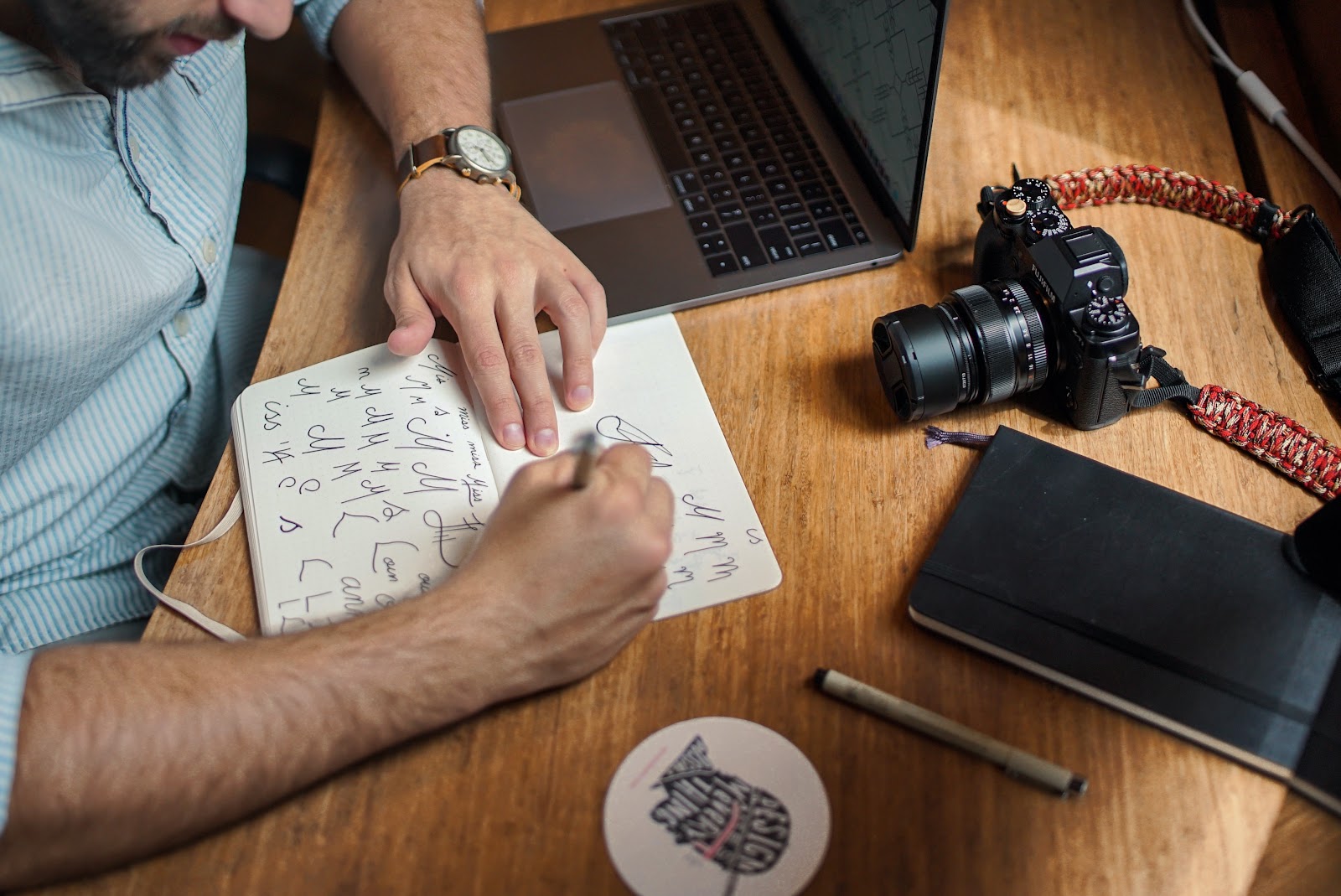
Image for post


By Tom Beck


Sustained creativity is difficult. Too often, we’re seduced by the allure of inspiration. We wait for the muse to strike.

According to the World Economic Forum, creativity will be one of the most vital skills in the twenty-first century. Creativity is not just for working artists — it’s a useful and increasingly necessary skill for anyone to possess.

To develop your creativity, you must learn how to tap into it every day. You must devise a system where you can produce constantly, no matter how you feel. No matter how dry your inspiration.

Consistent creativity requires a system. There’s a bit of up-front work putting the system in place, but once it’s there, it proceeds naturally. Julia Cameron likens the creative process to a radio — with a transmission and a receiver. You must gather enough “inputs” (receiver) so that you can continually broadcast your creativity (transmission). You can also think of this process like refilling a well so that it’s always full when you need to draw from it every day.

What does the universe want you to create? If you cannot find time to stop and listen, you will never know.

For years, I struggled with this. I was always taking from my creative well but never refilling it. I would have sporadic bursts of creative work followed by droughts of inactivity. I never thought about refilling my well so it’s no surprise it was often empty. Instead of understanding the process, I beat myself up. I considered myself “not creative” enough.

But we’re all creative. Creativity is as natural to humans as breathing. Remember when you were a kid — you were creative without thinking about it. You just did it. You drew and wrote and painted and played music and danced because it was fun. That’s it.

Over the last few years, I’ve developed a little routine each day that helps me stay creative. It’s quite simple — only three real tools, none of which takes very long. You could do all of them in an hour — twenty minutes each. Every morning, I make these three tasks my priority.

They’re the most crucial things I could do — they refill my creative well.

#1 Journal

“Journaling daily is the most potent and powerful keystone habit you can acquire. If done correctly, you will show up better in every area of your life — every area! Without question, journaling has by far been the number one factor to everything I’ve done well in my life.” — Benjamin Hardy

The first thing I do in the morning, immediately after I wake up, is to write three pages in my journal. Well, usually, I get coffee, first. But then it’s right to the pages.

Journaling refills the creative well via subtraction. Like you, I have so many thoughts bouncing through my head — concerns ranging from what I need to pick up at the grocery store to how to fix the world’s problems. Writing in my journal helps get these thoughts out of my head and onto the page so that my mind is clear.

Here’s a neat trick — write down what you need to do each day.

You haven’t done it yet, but your brain feels like something has been accomplished. It’s why writing lists is so satisfying. I use my journal as a to-do list for the day — here are the things I need to accomplish. My list runs from the mundane (pick up more milk) to the abstract (thoughts about a poem I’m working on). I don’t think about it too much, I just list off the things on my mind.

Another technique for your journal is future-planning. In Personality Isn’t Permanent, Benjamin Hardy recommends using your journal for goal-setting. As Hardy writes, you can use your journal to:

  • Clarify your ideas and insights

  • Affirm that you can make your goals real

  • Make plans for accomplishing your goals

  • Acknowledge the help you receive

I like to write down my goals every day in my journal. Every month and every quarter, I do a review and reassess the goals I have, my progress, and how important they remain to my happiness. I do all of this in my journal and it’s a great way to keep myself motivated, particularly on those days that I don’t feel like working.

A journal is also a good warm-up exercise. If you write, I’m sure you’ve noticed that the first couple hundred words you produce aren’t very good. It takes a bit of time to swing into practice. Writing in your journal helps you work through the awkward pre-writing. Then, when it’s time to dive into a creative project, you’re already warmed up. You can think of your journal like stretching before you go for a run.

I like to write in my journal right after I wake up so that I can record my dreams while they’re still fresh. I don’t keep a dream journal per sé, but it’s helpful to write down my initial impressions. When you sleep, your mind doesn’t turn off. Your subconscious remains alert and communicates to you throughout the night. Many of my deepest insights have come from remembering and recording my thoughts immediately after waking up.

#2 Meditate

“What I’ve discovered is that the practice of diving within in meditation makes ideas easier to catch and the enjoyment of the doing increases exponentially and you appreciate people more — you seem to almost recognize everyone. It becomes fun to work. It’s not the kind of thing that you even think about, it just grows naturally.” — David Lynch

After I finish writing in my journal, I sit down and meditate for ten or twenty minutes. Like journaling, meditation is another subtraction technique. It’s another way to clear the mind so that creative thoughts have room to breathe.

Whereas journaling is an active form of subtraction (you actively write down your thoughts as a way to clear your head), meditation is a passive form of subtraction. You sit and watch your thoughts — that’s it.

Meditation is a form of prayer. It’s a way to reconnect with the universe. It’s a way to slow down and listen to what the universe is trying to tell you. What does the universe want you to create? If you cannot find time to stop and listen, you will never know.

I use meditation to get clarity on my creative goals. Often, I have a lot of goals running in tandem and it can be hard to know what to prioritize. Especially with financial considerations. As with many of our best creative ideas, we can struggle to think about how to “monetize” them. Worst, your loftiest creative goals promise to take years, even decades to accomplish.

How can you prioritize long-term projects with short-term payoffs (like making sure this month’s rent is paid)? Meditation helps. When you meditate, you get clarity on what you are supposed to do. Clear your head, listen, and the universe will tell you where to put your focus.

#3 Go for a walk

“All truly great thoughts are conceived by walking.” — Friedrich Nietzsche

In the middle of the day, usually after lunch, I go for a twenty-minute walk. Unlike journaling and meditation, walking is an additive process. The goal is to gather sensory details that I can repurpose for my creativity. Walking actively refills the well.

A Stanford study found that walking can boost creative output by 60 percent.

At its most basic level, walking provides the sensation of moving forward. In our creative endeavors, we can often feel like we’re stuck or that we’re going in circles. Taking a walk helps to recalibrate our focus forwards. By taking a walk, you can reaffirm a little bit of control.

Walking is inefficient, which makes it the perfect antidote to our frenzied age. We are so accustomed to receiving things immediately that we grow restless at the slightest delay. Creativity requires time. It needs to simmer for a while. You need to slow down.

A walk slows you down. Because it is slow and inefficient, it is ill-designed to get you anywhere in time. Which is good, because the point of your walk is to notice what you see. When you slow down, you are forced to notice details — you see every house, every pedestrian, the trees, the flowers, the clouds, the cracks in the pavement. These little details are the threads with which you will weave your creative projects.

Walking is also a physical activity — it reconnects you to your body. Your body is controlled by your subconscious mind, which is also the source of your creativity. It’s your muse. Think of your subconscious like your creative muscle. Walking is how you exercise it and keep it fit and healthy.

There is a rhythm to walking. It is no coincidence that in English, we describe poetic units as feet. To walk is to connect to the poetry of the body — to feel the swinging feet of words dashing across the verses of the street.

Take a notebook with you when you walk and write down your thoughts. Stop occasionally and look at something for a while. The painter Rodin recommended to the poet Rilke to spend an hour looking at one thing — so that you can really see it. Wallace Stevens wrote all of his poetry walking to and from work.

Walk every day and you’ll always have a full creative well to draw from. You’ll never have to worry about inspiration again.

I make sure I do each of these activities every day. No excuses. If I can’t prioritize doing these three things, then I am not prioritizing my creativity. It’s as simple as that.

After I do these three things, I sit down and write. Over the years, I’ve developed a checklist for keeping a daily writing habit. Get the checklist here.

There are some days I don’t work. There are days where I’m just too busy to do anything creative. Even on those days, I make sure to carve out time to journal, meditate, and walk. If I can do that, I can keep my creative well filled. Otherwise, I risk over-drafting the next time I sit down to create.

Mind Cafe’s Reset Your Mind: A Free 10-Day Email Course

We’re offering a free course to all of our new subscribers as a thank you for your continued support. When you sign up using this link, we’ll send you tips on how to boost mental clarity and focus every two days.


https://medium.com/mind-cafe/3-simple-habits-that-can-supercharge-your-creativity-c7cc81530fa